




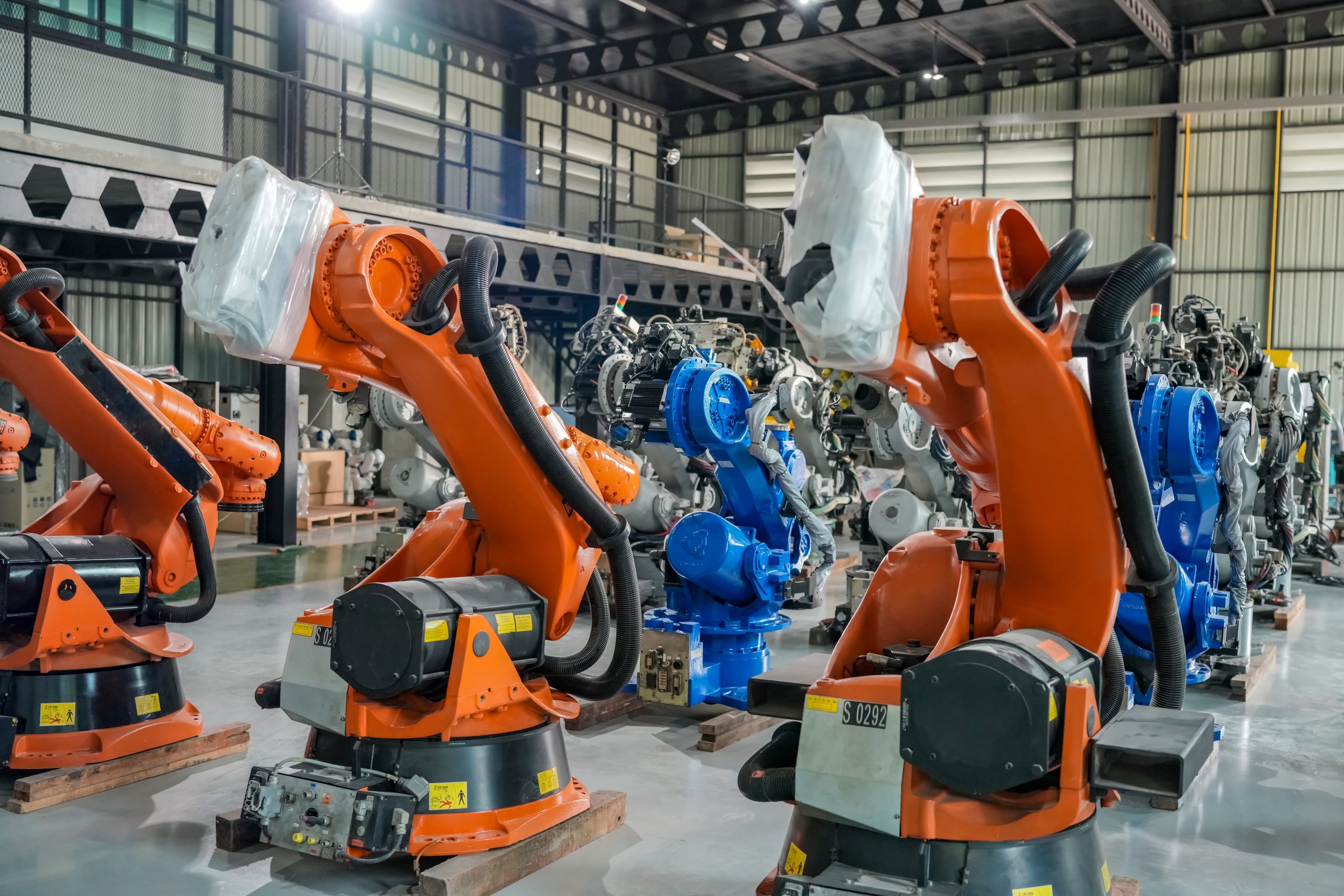
Industrial robots have powered factories for decades, but today’s manufacturing landscape is changing rapidly with the introduction of AI-driven industrial robots. These robots combine mechanical strength with artificial intelligence, enabling them to think, adapt, and improve in ways traditional robots cannot. They are transforming industries by boosting productivity, reducing errors, and enabling automation at an unprecedented scale.
What Are AI-Driven Industrial Robots?
Traditional robots follow fixed instructions. AI-driven robots, however, use machine learning, computer vision, and advanced sensors to understand their environment and make decisions.
AI-powered robots can:
-
Learn new tasks.
-
Recognize objects.
-
Adapt to changes.
-
Improve through experience.
This makes them far more flexible and intelligent than older robotic systems.
Key Technologies Behind AI Industrial Robots:
1. Computer Vision:
AI enables robots to “see” using cameras and sensors. They can identify parts, detect defects, read labels, and perform quality checks automatically.
2. Machine Learning:
Robots learn patterns from data, improving efficiency over time. For example, they adjust movements to improve precision or adapt to new materials on an assembly line.
3. Natural Language Processing:
Some robots understand voice commands and interact with workers, improving collaboration and safety.
4. Predictive Maintenance AI:
AI predicts when a robot part will fail, preventing breakdowns and reducing downtime.
Applications Across Industries:
1. Manufacturing & Assembly:
AI robots handle:
-
Welding.
-
Screwing.
-
Painting.
-
Component assembly.
They ensure high accuracy and faster production lines.
2. Quality Control:
Computer vision systems inspect products faster and more accurately than humans—reducing defects and ensuring consistent quality.
3. Packaging & Palletizing:
Robots organize products, stack boxes, and prepare shipments efficiently.
4. Automotive Industry:
AI robots assemble engines, inspect parts, and support self-driving car manufacturing.
5. Electronics Production:
Robots handle tiny components with extreme precision, helping produce smartphones, chips, and circuit boards.
Benefits of AI-Driven Industrial Robots:
1. Higher Productivity:
Robots work continuously without breaks, boosting output.
2. Greater Accuracy:
AI allows robots to complete tasks with micron-level precision.
3. Lower Operational Costs:
Automation reduces labor expenses, waste, and production errors.
4. Improved Safety:
Robots take over dangerous tasks, reducing workplace accidents.
Challenges & Considerations:
1. High Implementation Costs:
Automation systems require significant investment in equipment and integration.
2. Skill Requirements:
Workers must be trained to operate, maintain, and program AI-powered robots.
3. Cybersecurity Risks:
More intelligent robots mean more connected systems—requiring strong cybersecurity protection.
The Future of AI Industrial Robots:
Expect advancements such as:
-
Fully autonomous factories.
-
Robots collaborating seamlessly with humans.
-
Real-time optimization of production lines.
-
Self-learning robots that improve performance automatically.
AI-driven robots are not replacing human workers—they are enhancing productivity, enabling smarter operations, and shaping the future of industrial automation.