





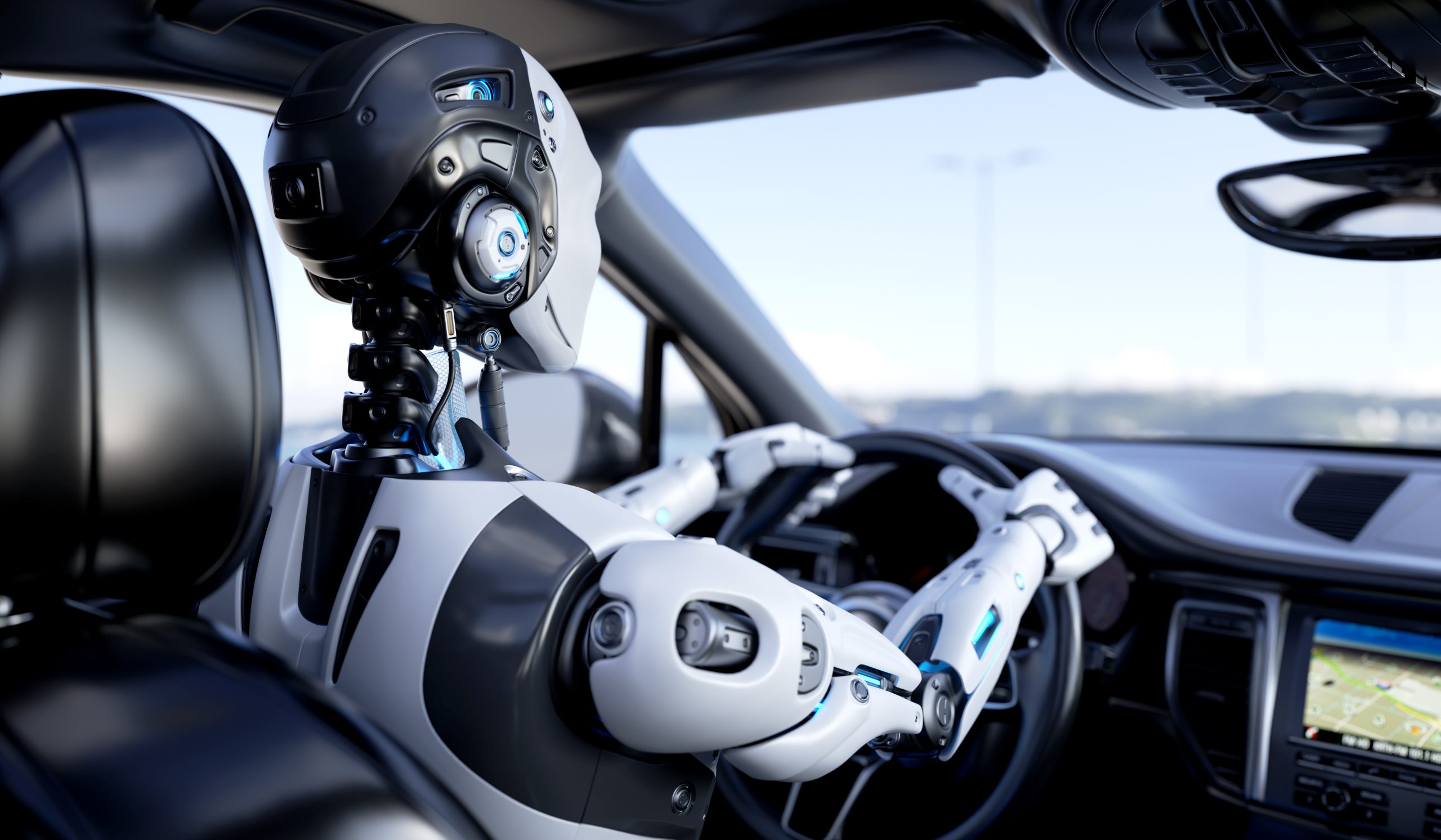
Self-driving cars are no longer just a futuristic idea—they are rapidly becoming reality. Behind this transformation is machine learning (ML), the technology that enables vehicles to understand their environment, make decisions, and navigate safely without human input. ML has become the brain of autonomous driving systems, helping cars learn from data and continuously improve their performance on the road.
Why Machine Learning Matters in Self-Driving Cars:
Self-driving cars must do three things extremely well:
-
Perceive the environment.
-
Analyze what is happening.
-
Act safely and quickly.
Machine learning handles all three. It processes vast amounts of data—from sensors, cameras, GPS, radar, and LiDAR—to help cars interpret their surroundings and make intelligent driving decisions.
Key ML Technologies Used in Autonomous Vehicles:
1. Computer Vision:
Computer vision allows self-driving cars to “see” the road. ML models analyze images from cameras to identify:
-
Traffic signs.
-
Pedestrians.
-
Lane markings.
-
Other vehicles.
-
Road obstacles.
Deep learning models can interpret this information in real time, even during complex situations like heavy traffic or poor weather.
2. Sensor Fusion:
No single sensor gives enough information. ML combines data from:
-
LiDAR (distance measurement).
-
Radar (detects motion).
-
Cameras (visual recognition).
-
GPS (navigation).
Sensor fusion ensures the car gets a complete understanding of its surroundings, boosting safety and accuracy.
3. Path Planning:
Machine learning helps the car decide:
-
When to accelerate or brake.
-
How to change lanes.
-
When to turn.
-
How to avoid obstacles.
These decisions rely on predictive models that evaluate potential outcomes and choose the safest path.
4. Behavioral Prediction:
Self-driving cars must interpret human behavior. ML models predict what pedestrians, cyclists, and drivers might do next. For example:
-
Will a pedestrian step off the curb?
-
Is the car ahead planning to merge?
By predicting movements, the system prevents collisions and reacts proactively.
Levels of Automation in Self-Driving Vehicles:
Machine learning supports different levels of autonomy:
Level 1–2: Driver assistance:
-
Lane keeping.
-
Adaptive cruise control.
Level 3: Partial autonomy:
Car drives itself under specific conditions, but human must be ready to intervene.
Level 4: High autonomy:
Car can handle most situations with minimal human input.
Level 5: Fully autonomous:
No steering wheel needed—the car drives itself entirely.
We are transitioning from Level 3 to Level 4, with ML advancements making higher autonomy possible.
Challenges ML Helps Solve:
1. Complex Environments:
Roads are unpredictable. ML helps vehicles adapt to:
-
Sudden changes.
-
Road construction.
-
Unmarked zones.
-
Harsh weather.
2. Real-Time Decision Making:
Cars must make decisions in milliseconds. ML accelerates processing and reduces reaction time.
3. Safety Optimization:
ML constantly learns from millions of miles of driving data to improve accuracy and prevent accidents.
The Future of ML in Self-Driving Cars:
Expect advancements such as:
-
More robust decision-making in unpredictable conditions.
-
Improved communication between vehicles (V2V) through ML.
-
Smarter road infrastructure integrating with autonomous systems.
-
Fully autonomous taxis and delivery vehicles.
Machine learning is the foundation of safer, smarter transportation. As models become more advanced, self-driving cars will move from experimental to everyday reality.