





The restaurant and food service industry is undergoing a major transformation as robotics enters kitchens, dining areas, and delivery operations. With rising labor costs, high customer expectations, and the need for efficiency, robots are becoming essential tools that help restaurants operate faster, safer, and more consistently. Robotics is no longer a futuristic concept—it is becoming a practical solution for everyday challenges.
Why Restaurants Are Turning to Robotics:
1. Labor Shortages:
Restaurants worldwide face staffing shortages. Robots fill gaps by handling repetitive and time-consuming tasks.
2. Rising Operational Costs:
Automation reduces labor expenses and minimizes food waste, helping restaurants maintain profitability.
3. Consistency & Quality:
Robots prepare food with precise measurements and consistency, improving customer satisfaction.
4. Hygiene & Safety:
Robotic systems reduce human contact with food, helping maintain strict hygiene standards—especially important after COVID-19.
Popular Robotics Uses in Food Service:
1. Robotic Chefs:
Robots can cook dishes autonomously using predefined recipes. For example:
-
Miso Robotics’ “Flippy” cooks burgers and fries.
-
Automated wok chefs in Asian restaurants stir-fry meals flawlessly.
-
Pizza-making robots stretch dough, add toppings, and bake pizzas consistently.
These robots reduce cooking time and improve accuracy.
2. Food Preparation Robots:
Robots chop vegetables, mix salads, dispense sauces, prepare beverages, and assemble meals. This frees up human staff for higher-value tasks like customer interaction.
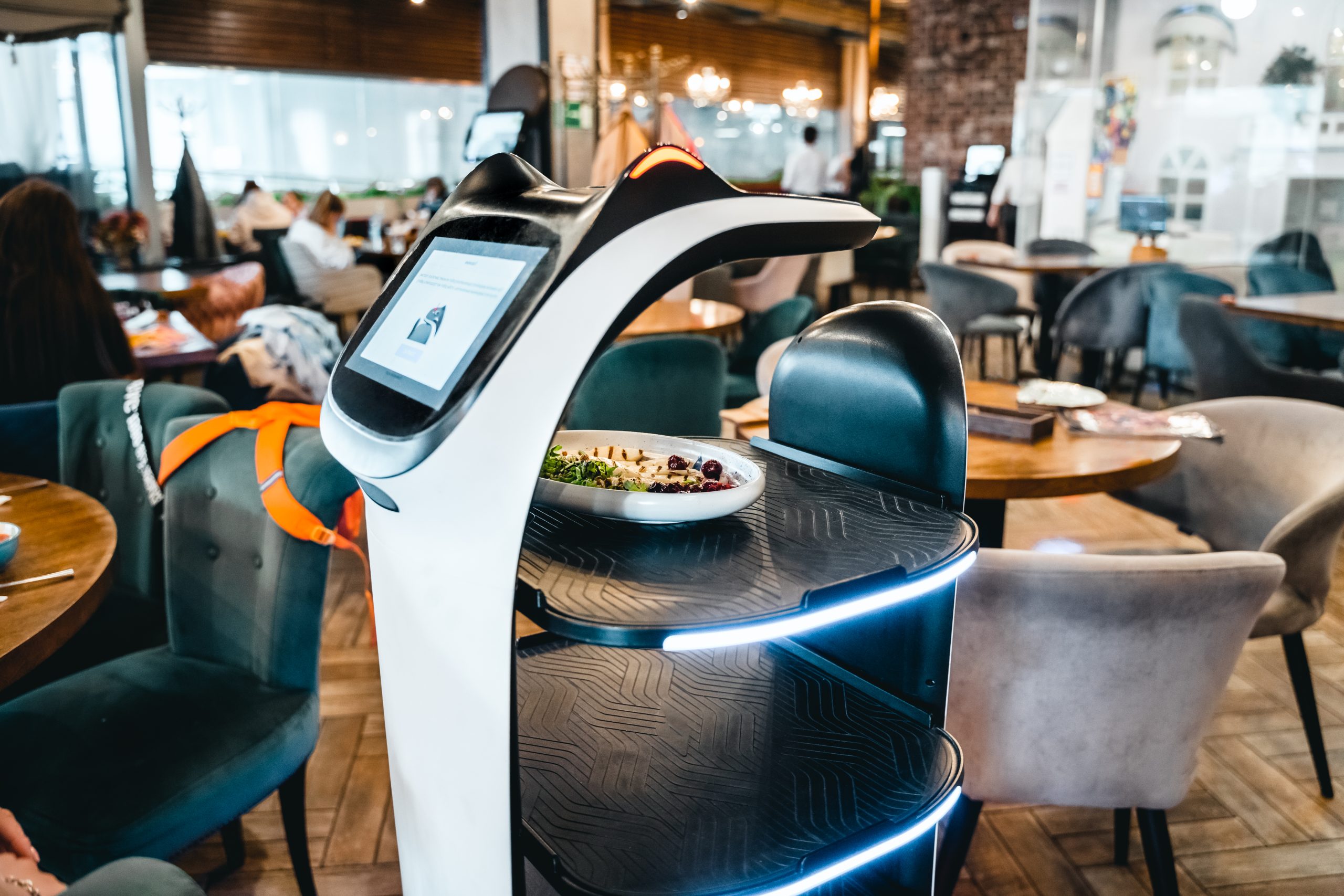
3. Robotic Waiters:
Service robots deliver food to tables, collect plates, and assist servers during busy hours. They navigate the dining area safely using sensors and mapping systems.
4. Automated Beverage Machines:
Robotic bartenders and coffee-making robots prepare drinks precisely. This reduces waiting time and improves consistency.
5. Kitchen Cleaning Robots:
Robots wash dishes, clean floors, and sanitize surfaces—reducing the burden of manual labor.
6. Delivery Robots & Drones:
Restaurants increasingly use:
-
Sidewalk delivery robots.
-
Autonomous delivery vehicles.
-
Drone deliveries.
These solutions reduce delivery time and eliminate dependence on third-party services.
Benefits of Robotics in Food Service:
1. Faster Service:
Robots work quickly, especially during peak hours, helping restaurants deliver meals faster.
2. Reduced Errors:
Automated cooking and serving reduce mistakes in orders.
3. Better Food Safety:
Robots ensure consistent hygiene and eliminate contamination risks.
4. Enhanced Customer Experience:
Robots add novelty, entertainment, and efficiency—creating a memorable dining experience.
5. Lower Long-Term Costs:
While robots require upfront investment, they reduce long-term labor and operational costs.
Challenges to Overcome:
1. High Initial Investment:
Robotic equipment can be expensive for small restaurants.
2. Technical Maintenance:
Robots require regular servicing, updates, and repairs.
3. Customer Acceptance:
Not all customers may feel comfortable interacting with robots.
4. Workforce Transition:
Existing staff need training to operate and monitor robots.
The Future of Robotics in Restaurants:
Expect innovations like:
-
Fully autonomous quick-service restaurants.
-
Robot-only kitchens.
-
AI-powered menu creation.
-
Personalized robotic cooking based on customer taste.
Robotics will not replace human staff entirely, but it will help restaurants improve speed, safety, and customer satisfaction.